
Super Great Cleaning Services
House cleaning in Ara Damansara: Choose the right sink-cleaning method
Compare three ways to clean a kitchen sink, match each to the surface and soil, and describe the work clearly when arranging a house clean.
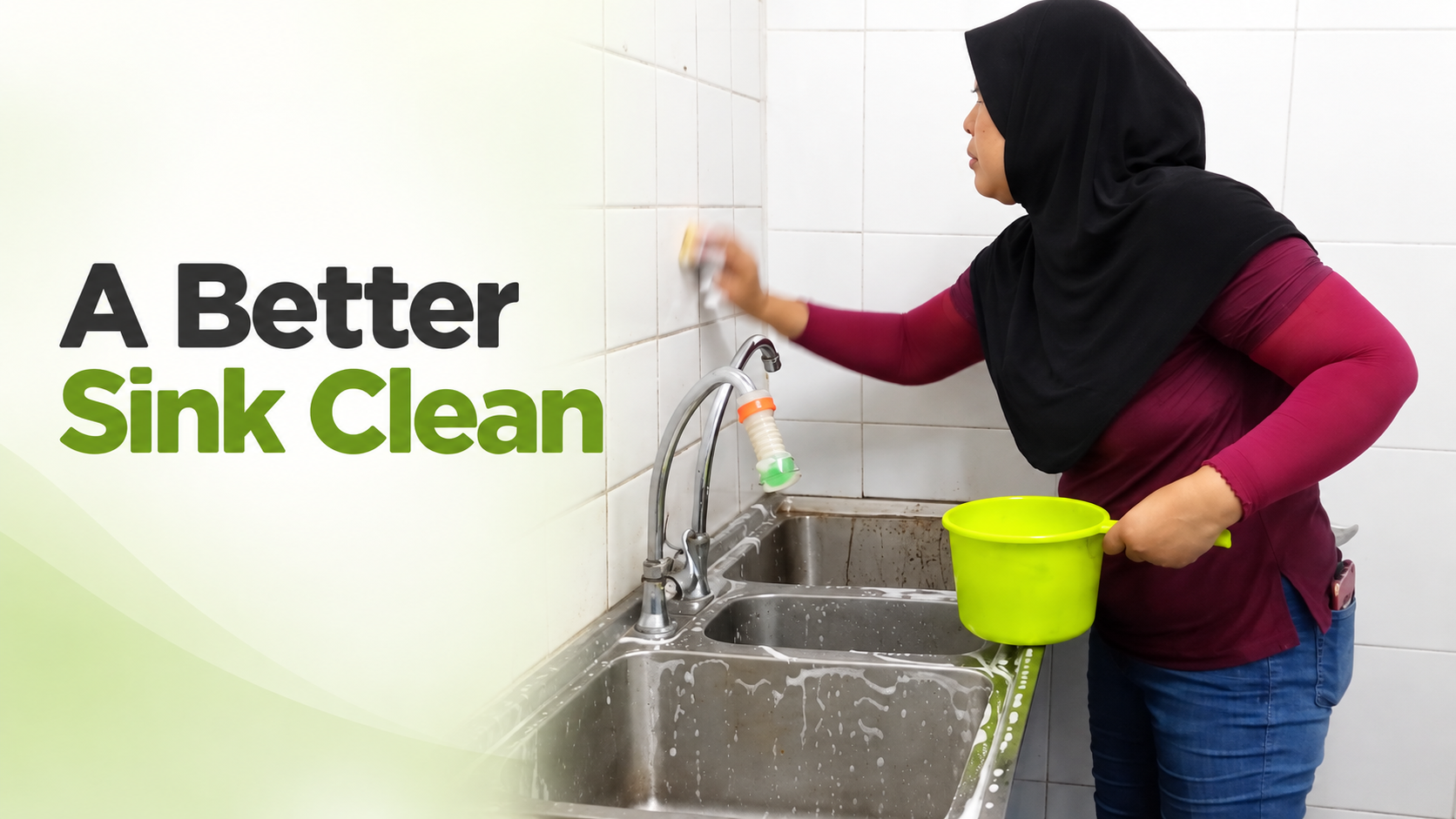
“What kind of house cleaning should I choose in Ara Damansara when my kitchen sink still looks dull?” Start by matching the method to the sink and the mark: detergent for everyday food film, a soft brush for dried residue, and a surface-approved descaler only for mineral deposits. Super Great Cleaning Services offers house cleaning, with Ara Damansara in its service coverage.
Read the sink before reaching for a stronger cleaner
A white ring around the tap, a dull film across the bowl and a dark line near the plug may come from different sources. Food oils and starch usually leave a slippery or cloudy film; mineral deposits tend to form a harder outline where water repeatedly dries. The colour alone doesn’t identify the cause.
The finish matters too. Stainless steel has a visible brushed grain, so wipe in that direction. A glazed ceramic sink has a smooth, glass-like surface, while composite sinks can have a matte texture and care requirements that vary by maker. Check the product label, manual or original purchase details if you’re unsure.
Water that dries around a tap base or aerator can leave mineral spots. Before treating them, check that the sink material and finish permit the product you plan to use.
Three approaches, and where each one falls short
Choose the least aggressive method that fits the soil. A stronger chemical or rougher pad can create a new problem if the mark is only everyday residue or the sink has a delicate finish.
- For everyday food film, use a small amount of mild dish detergent with a soft sponge or microfibre cloth, then rinse. It works well on oily smears and light starch haze on compatible surfaces, but won’t usually lift a hard mineral ring by itself.
- For dried food caught around the plug or strainer, lay a warm, damp cloth over the area briefly, then work the edge with a soft nylon brush. This gives the residue time to loosen without the scratching risk of steel wool or a coarse scouring pad.
- For a chalky mineral line, use a descaler only if its label allows the sink material and finish. It can loosen scale that detergent leaves behind, but acidic products aren’t suitable for every surface; follow the label and rinse as directed.
Give the edges as much attention as the bowl
Take a two-bowl stainless-steel sink after dinner: one bowl has a cloudy starch film from rinsing rice, while the strainer holds tea leaves and scraps. Clear the loose debris first, wash the bowls with detergent, then use a small nylon brush around the strainer seat and tap base. Finish by wiping along the steel grain.
The basin is only part of the job. Check beneath the tap handles, around the overflow opening, along the rim where it meets the counter, and on the drainer where water pools. Those narrow joins can hold soap film even when the broad surface looks clean.
Keep a cloth used on the sink separate from one used in the bathroom. Drying the tap base and drainer after rinsing also helps you see whether a pale line remains or was simply water on the surface.
Make the cleaning request specific
“Clean the kitchen” can mean the bowl only, or it can include the tap, removable strainer, drainer and splashback. Name the actual surfaces and the mark you see: for example, “wash both sink bowls, clean around the strainer and wipe the tap base.” That gives you a clearer scope to compare.
If the sink is composite, coated or otherwise unfamiliar, mention that before the visit and share any care guidance you have. Ask whether the sink detail you want is part of the requested house clean; the exact scope can vary between arrangements.
A useful comparison focuses on the visible result and the surfaces involved, not a vague label such as “deep clean.”
Frequently asked questions
How can I clean a stainless-steel sink without scratching it?
Use a soft sponge or microfibre cloth with mild dish detergent, and wipe along the visible grain. Rinse away the soap and avoid steel wool or coarse pads, which can leave scratches.
What removes a white ring from a kitchen sink?
A hard, chalky ring may be mineral deposit, while a slippery or cloudy film may be food residue. Try mild detergent first; if the ring remains, check the sink maker’s care guidance before using a descaler.
Can I use the same cleaner on ceramic and composite sinks?
Don’t assume one cleaner suits both. Glazed ceramic and composite finishes can have different care requirements, so check the product label and the sink maker’s instructions before applying it.
What should I tell a cleaner about my kitchen sink?
Name the sink material if you know it, describe the mark and point out whether you want the bowl, tap base, strainer, drainer or splashback cleaned. Mention any care restrictions so the method can be matched to the finish.
A sink is easier to clean well when you identify both the finish and the residue first. Use the gentlest suitable method, then make the surfaces you want cleaned explicit.
Related articles: 4 Cabinet Clues for Pre and Post-Renovation Cleaning in Ara Damansara · How to Plan Part-Time Maid Cleaning in Petaling Jaya When You Have Pets