Super Great Cleaning Services
Kuala Lumpur Home Cleaning—Why Do Floors Feel Sticky?
A sticky floor often points to cleaner residue, a soiled mop or grease transferred across the surface. Use the tacky patch’s pattern and a small, careful check to narrow down the cause.
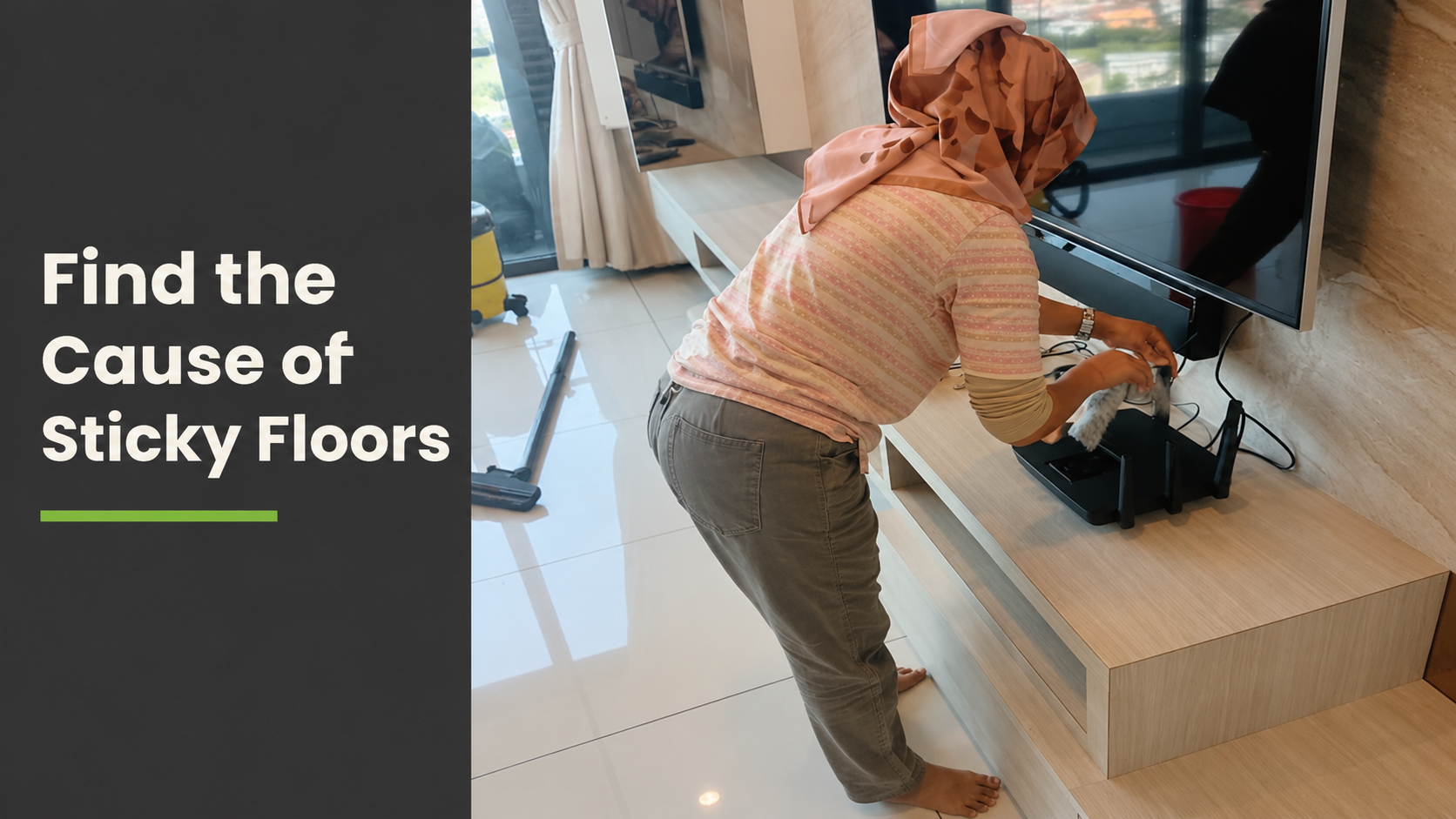
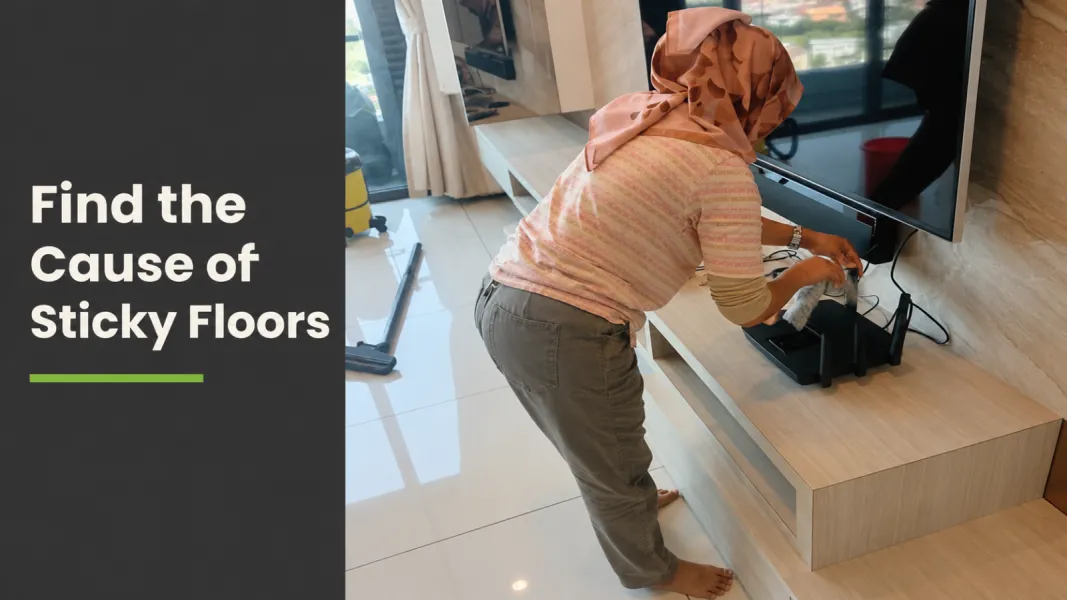
A tile can look clean yet feel tacky when a thin detergent film dries on it instead of being lifted away. If your floor feels sticky after home cleaning in Kuala Lumpur, check for cleaner residue first, then a dirty mop head or grease carried out from the kitchen; another dose of product can make it worse. You can narrow down the cause with your bare feet, a clean white cloth and a look at where the tackiness starts.
Start with the sticky patch
Wait until the floor is fully dry before judging it. A damp surface can feel grabby underfoot even when there is no residue, and Kuala Lumpur’s humid weather can slow drying in a room with little airflow. Once dry, notice whether the tackiness covers the whole room, follows a walking route or sits in one small area.
A broad, even film across several tiles points toward something spread during mopping, such as excess cleaner or dirty rinse water. A patch near the hob, dining chair or rubbish bin may have a more local source: cooking oil, a dropped sweet drink or a greasy footprint. Grout lines can hold residue even when the flat centre of a tile feels smooth.
Try a clean white cloth on one dry patch. If it picks up a grey or greasy mark, that gives you a clue about what is on the surface; if the cloth slides cleanly but the floor still feels tacky, product film is still possible. Compare the patch with a nearby tile that feels normal before deciding to re-clean the whole room.
What to check during home cleaning
A cleaner that is too concentrated can leave a thin film behind. Check the bottle’s dilution directions: a capful intended for a full bucket may be too much for a small amount of water. More product does not necessarily cut through soil faster, and leftover detergent can make the surface feel sticky as it dries.
The floor finish matters. Glazed ceramic tile, vinyl planks and natural stone do not all tolerate the same products or rinsing methods. A patch of residue may also look different on each: grout can hold a dull line, while a smooth tile may show faint streaks when light crosses it. Follow the floor maker’s care instructions if you have them, especially before using a stronger cleaner.
Think back to the last clean, too. Was a new product used, was the floor left with visible foam, or did the mop pass over the same area repeatedly? Those details help distinguish a product film from soil that was never lifted. Avoid mixing cleaners or adding vinegar as a quick fix; an acidic liquid can damage some stone and grout.
When the mop brings soil back
A mop head can move dirt around once its fibres are loaded with grease and fine grit. Check the bucket water: if it turns cloudy after a short pass, or leaves a foamy trail behind the mop, the rinse water may already be carrying residue. A mop pad that feels oily or has a stale smell also deserves a rinse or replacement before it touches another room.
Kitchen soil can make this worse. A small splash of cooking oil beside the hob or a sugary drink under a dining chair can spread into a wider, nearly invisible film when a damp mop crosses it. Look at the edges of the tacky area and the path between the kitchen and living room. A sticky strip that follows that route is a useful clue; a whole-room film is less likely to come from one isolated spill.
Keep the next check small. Rinse or change the mop pad, use fresh water and clean only a single tile or a short section according to the floor’s care guidance. Let it dry, then compare it with the untouched area. If the test patch feels better, the mop or rinse water may have been carrying soil; if not, reconsider the product or the floor finish.
A careful test can tell you when to stop
Start with the least disruptive check: let the floor dry, wipe a small patch with a clean, lightly damp cloth if the finish permits it, and dry it with another cloth. Do not flood plank joins or unsealed edges; moisture can reach the core of some flooring and cause swelling. Keep the test away from a visible scratch or worn spot so you can compare like with like.
If the tackiness returns across the whole room after a label-compliant clean, or a white cloth keeps picking up sticky residue, stop adding product and ask a cleaning or flooring professional to assess the surface. A soft, peeling or blistered finish is different from ordinary dirt; so is a floor that has started swelling at plank edges. These signs can point to a coating or material problem that another mop pass will not solve.
If you’re arranging a home clean, Super Great Cleaning Services offers house cleaning.
Frequently asked questions
Should I mop the whole house again if only one spot feels sticky?
Not straight away. Let the area dry, check for a nearby spill or greasy footprint, and test a small patch with a clean cloth before treating the whole floor. A local mark may need a different response from a film spread across the room.
Can I use vinegar to remove a sticky floor film?
Only if the floor’s care instructions say vinegar is suitable. Acidic liquids can harm some natural stone and grout, and a product that works on one surface may damage another. Check the floor material and its maker’s guidance first.
Why is the floor sticky only beside the hob?
A tacky patch beside the hob can come from cooking oil or food residue rather than cleaner film spread across the room. Check the nearby tile and the path out of the kitchen with a clean white cloth; a local greasy mark points to a local soil source. Avoid spreading it with a mop pad that already feels oily.
Check the floor’s pattern, wait until it is dry and test a small patch before changing products. A persistent tacky feel or a damaged finish calls for an assessment of the flooring itself.
Related articles: House Cleaning in Kuala Lumpur: Five Booking Mistakes to Avoid · Office Cleaning in Kuala Lumpur Needs an Access Plan