
Super Great Cleaning Services
5 Dust Myths to Drop Before and After Renovation Cleaning in Ara Damansara
Renovation dust can travel beyond the room being worked on. Learn how to contain it, choose suitable dust extraction, protect nearby spaces and plan the final clean from high surfaces down.

The costly mistake is treating the workroom as the only dusty room: fine powder can escape under doors and on shoes, turning a final pass into repeat cleaning. For pre and post renovation cleaning in Ara Damansara, contain dust while cutting and sanding are underway, then clean high-to-low after those trades finish. Super Great Cleaning Services offers pre- and post-renovation cleaning in Ara Damansara.
Myth 1: A closed door keeps renovation dust in
An ordinary interior door has gaps at the threshold and around its frame. Air can carry fine plaster or filler dust through those openings; a return-air grille or transfer vent can also connect a work area to other parts of a home.
Keep the door to a clean room shut, but don’t treat it as a sealed barrier. Ask the contractor how the work zone will be separated and whether dust extraction can run at the cutting or sanding point. A properly fitted zippered barrier with taped edges is a more useful boundary than a loose sheet that lifts when people pass.
Myth 2: Any vacuum can handle plaster and tile dust
Fine dust from sanding joint compound or drilling tile can clog a filter quickly. When suction drops, the tool may leave powder in corners and along skirting; a machine without filtration suited to fine dust can also exhaust particles back into the room.
Use a dust extractor or vacuum designed for fine construction dust, with the correct bag and filter fitted. Check the filter and collection bag as work progresses, and connect extraction to cutting or sanding tools where the equipment allows it. A regular household vacuum is for ordinary household dirt unless its manufacturer says it can handle this kind of dust.
Myth 3: Opening every window clears the room
A breeze can carry dust from a workbench across a bedroom or toward the corridor instead of outdoors. In Ara Damansara, a sudden downpour can also leave the entrance mat and shoes damp, making fine grit easier to track onto floors.
Think about where air is moving before opening windows on both sides of the home. For dusty work, local extraction should capture particles near the tool, with exhaust directed outside rather than into a shared corridor. Keep nearby clean rooms closed off if the airflow is carrying dust toward them.
Myth 4: Only the room being renovated needs protection
Dust travels on shoe soles, trolley wheels and tool cases. A bedroom just outside the work zone can collect powder at the doorway, while clean linen, toys or small appliances left uncovered may need attention before the room is usable again.
Before work starts, protect the route and nearby belongings. Use floor protection suited to the installed surface and secure it flat; loose edges can become a trip hazard.
- Lay a protected route from the workroom to the exit.
- Move linen, toys and small appliances behind a closed barrier or cover them.
- Keep tools and cut materials inside the work zone rather than on clean hall surfaces.
- Vacuum the route and threshold with suitable fine-dust equipment before reopening nearby rooms.
Myth 5: A clean-looking floor means the dust is gone
Dust settles on surfaces above eye level: the top of a door frame, cupboard tops and ceiling fan blades can all hold a fine layer. Turn fans off before cleaning them; switching one on too soon can send settled particles back into the room.
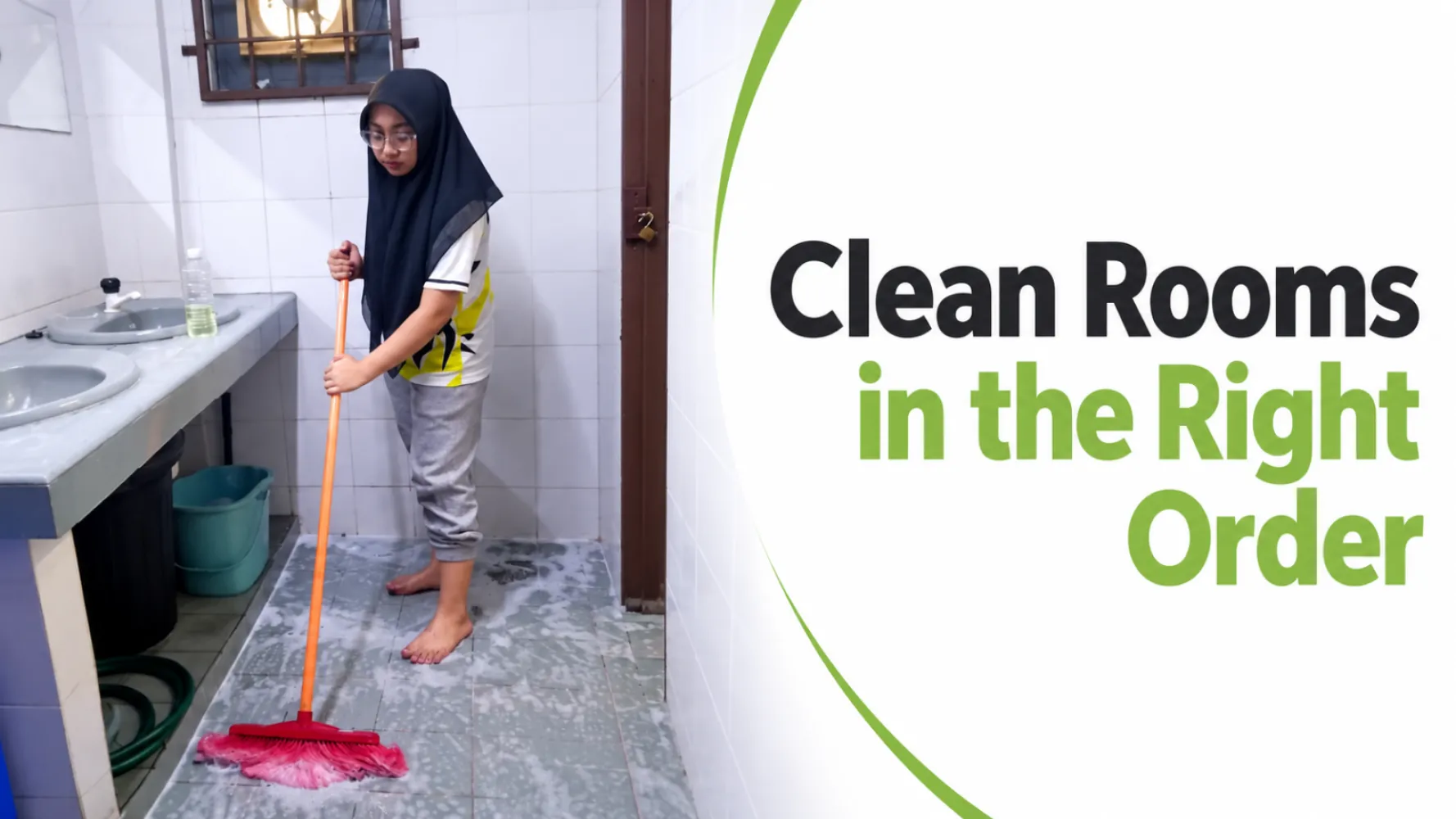
Work from high surfaces down, then finish the floor. A fine-dust vacuum with a soft brush can collect loose powder from ledges and edges before the final floor pass. If dust appears again after the dusty work has ended, check high surfaces and the work route before repeating the same floor clean.
Frequently asked questions
Will closing a bedroom door keep renovation dust out?
Not by itself. Gaps beneath the door and around its frame let air pass, and a transfer vent or return-air path may connect rooms. Keep the door shut and ask the contractor how the work zone is being sealed and dust extracted.
Can I use my normal vacuum after sanding or drilling?
Only if its manufacturer says it is suitable for fine construction dust. Plaster and tile dust can clog ordinary filters, reducing suction or allowing fine particles to escape. Use a dust extractor or vacuum with the correct fine-dust filtration and collection bag for the job.
Should I open the windows during renovation work?
It depends on the airflow and where the work is happening. Cross-breezes can carry dust into clean rooms or shared corridors, so use extraction near cutting and sanding and direct exhaust outdoors. Check the airflow before opening windows across the home.
What should I protect outside the renovation room?
Protect the route from the work zone to the exit, since shoes and trolley wheels can carry dust along it. Move or cover linen, toys and small appliances in nearby rooms, and keep tools and cut materials within the work zone.
Why does renovation dust show up again after I clean the floor?
Fine particles may still be sitting on high surfaces such as door frames, cupboard tops or fan blades. Clean from high to low with fans switched off, then finish the floor; dust can otherwise fall onto it after the first pass.
Renovation dust control is a chain: separate the work zone, capture fine dust near the tool, protect the route out and save the floor for last. A high-to-low clean after cutting and sanding are finished helps prevent the same powder from being chased around twice.
Related articles: Carpet Care in Petaling Jaya (PJ) Starts with Dry Grit Control · Can Renovation Debris Stay Behind Before Cleaning in Petaling Jaya (PJ)?